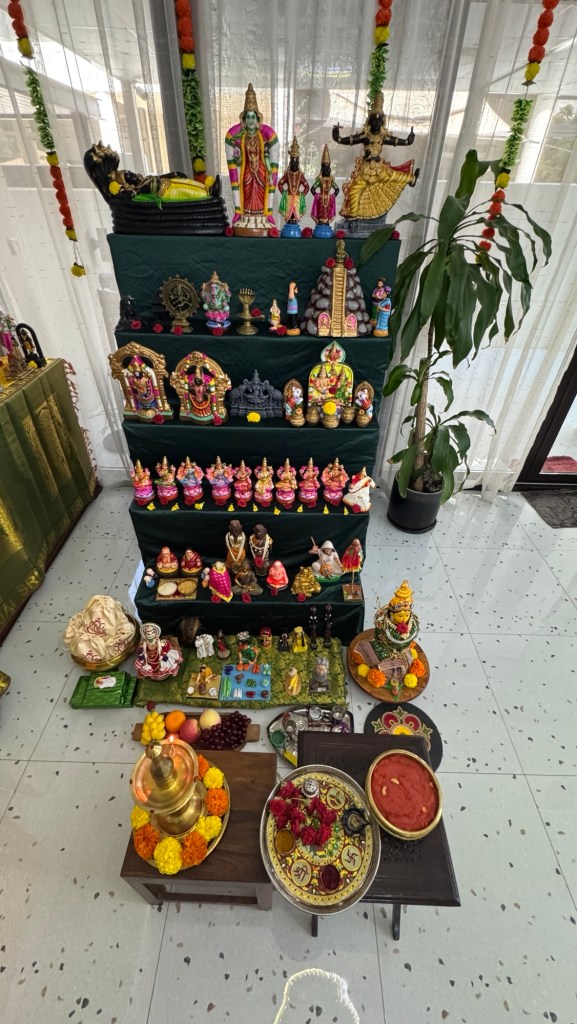
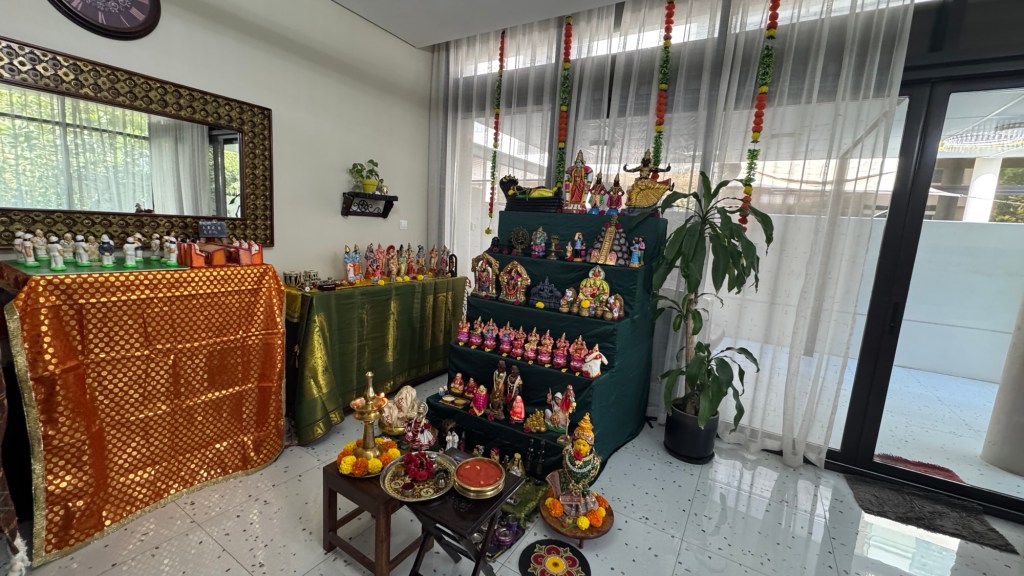
When it’s time to pack all the golus back, the feeling is very different. When we unpack them before Navratri, the whole house is filled with excitement. There is so much energy — cleaning, arranging the steps, deciding which dolls go where, and remembering where each one came from. It feels like bringing stories and memories back to life.
For those who may not know, Golu (also called Kolu) is a South Indian tradition during the Navratri festival. Beautiful dolls and figurines are displayed on steps at home. Each step has a meaning — from gods and goddesses to scenes from daily life. It celebrates our culture, storytelling, and the joy of creation.
But when the festival ends, the feeling changes. The same shelves that looked bright and colourful now start to look empty. Each doll is carefully packed and wrapped in paper and bubble wrap — one by one. It’s a slow and emotional process, as if we are putting away small pieces of happiness until next year. The sound of laughter and music slowly fades, and the house feels calm again.
Every festival brings this moment — when joy slowly turns into silence. There is a small sadness, but also peace.Festivals are like life, they remind us that every ending is only a pause before the next new beginning.
Old movies are never just movies. They are time machines. Each time we rewatch them, we are carried back to the moments when we first saw them. The room, the chatter, the laughter, the smell of food, the playful arguments, the people who sat beside us—it all comes alive again. Some of those voices are silent now, some of those faces are no longer with us, but their presence lingers in every familiar scene.
What’s beautiful is that the movie itself never changes, yet the way we watch it always does. With each rewatch, it gathers new meaning. A dialogue that once made us laugh now stirs a quiet ache. A song that once felt romantic now feels like a memory of youth. We find ourselves noticing little things we missed before—an expression, a background sound, a silence ,even catch small things we missed before—a slip in a dialogue, a funny continuity error, an extra peeking into the camera. These little discoveries add a strange comfort, reminding us that even classics carry their own imperfections.
Old movies carry our changing lives within them, layer upon layer, like pressed flowers in the pages of a book.
Rewatching them is not an act of boredom or repetition—it is an act of remembrance. It is a reunion with a younger self, and with those who walked with us for a while. It is joy and longing woven together, a sweetness mixed with ache.
Old movies remind us that time may move on, but memories never truly leave us. They sit quietly, waiting for us to press play.
And sometimes, all it takes is an old movie to remind us how deeply we have lived.
Not every thought finds its way into words. Not every word finds its way into a message. And not every message finds the courage to be sent.
We all carry them – unsent messages. Some drafted in haste, some typed with trembling fingers, some written in the silence of our minds. They sit there, quietly in our notes,holding all the emotions we were not ready to release,the anger we softened, love we feared, gratitude we delayed, or closure we postponed.
The weight of these unsent messages is real. They remind us of the versions of ourselves that almost spoke up, almost reached out, almost changed the course of a relationship. They live in that space between what was said and what was felt.
Perhaps their purpose is not always to be delivered. Sometimes, they exist only to teach us something about ourselves what we long for, what we fear, what we are still learning to let go.
Yet, once in a while, sending just one unsent message can free us. It may not change the past, but it can lighten the present.
After all, words unsaid may carry weight but words released, even gently, can carry healing.
“Unsent messages weigh heavy, but the courage to release even one can turn silence into peace.”
Forgiving and forgetting is easier said than done. For some, it’s almost second nature,they can shrug off a hurt, ignore the sting, and move on as if nothing happened. But not all of us have that superpower button of ignorance. I, for one, neither forget easily nor ignore quickly. For people like me, learning the art of forgiveness isn’t just about being kind to others but about finding peace within ourselves.
It feels like learning a new exercise. The first time is awkward, uncomfortable, even painful. You don’t know if you’re doing it right. And yet, the more you practice, the more natural it becomes. Forgiving, too, needs to be practiced daily. Some days you will fail, slip back into old patterns, and carry the weight of resentment. But that’s okay. Being wired differently only means our journey will take its own time and rhythm.
It’s just like metabolism each person’s pace is different. The body takes its own sweet time to process food, and the mind takes its own sweet time to process blocks. Both need patience. Both need consistency.
What makes this art even harder is the world around us. Some people in our lives behave like walking versions of social media constantly broadcasting, judging, or waiting to pour out comments, both wanted and unwanted. If only life gave us a “dislike” button! Sadly, it doesn’t. At best, we have emojis to express what we feel. But in real life, the best filter we can use is silence and detachment.
There’s another side to this, too: we shouldn’t take compliments too seriously either. If we don’t let the bad stick, we shouldn’t let the good overinflate us. No good, no bad just balance. The only compass worth following is our instincts. When we start living this way, no one can make us feel toxic, no one’s words can cut us deeply, and no mean comment can define us.
Forgiveness, then, isn’t about excusing others. It’s about choosing yourself. It’s about learning to let go, one small step at a time, until you realize the weight is no longer yours to carry.
Because in the end, forgiveness is like fitness—nobody can do it for you, it takes practice, patience, and discipline. And just like a strong body, a strong mind is built when you train it daily. The more you forgive, the lighter you live. And the lighter you live, the freer you become.
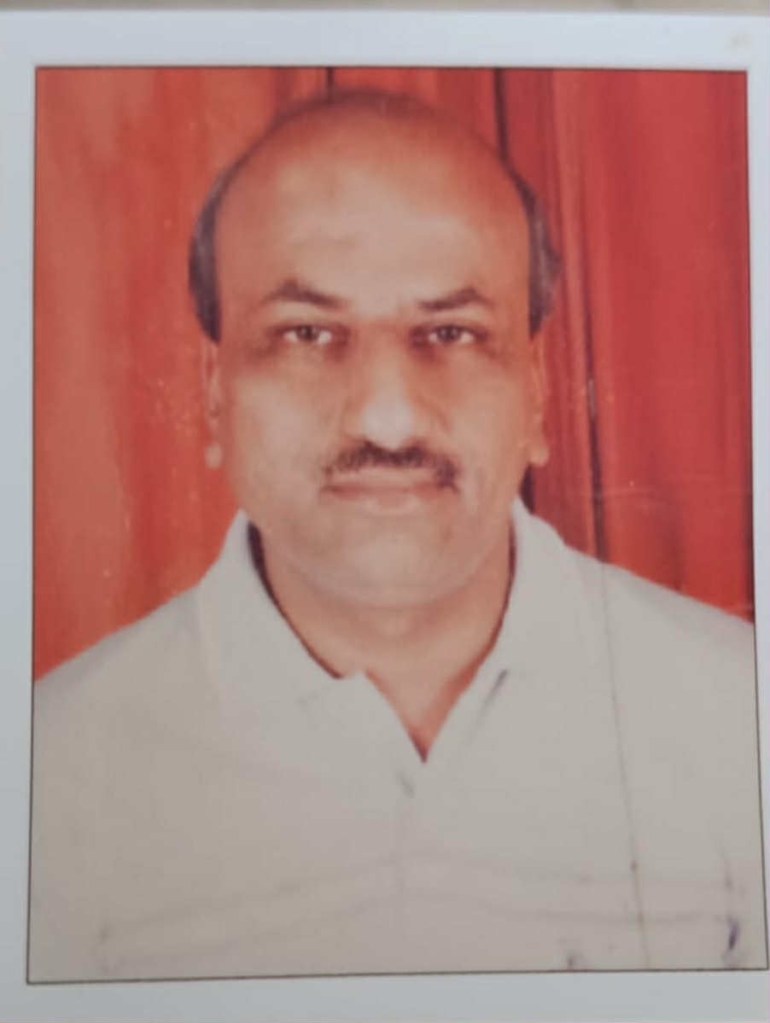
Today my father would have turned 77. Time may have taken him away, but his presence continues to live through me every single day.
He was the one who shaped my world in ways I can never forget. It was from him that I inherited my love for reading, my endless curiosity for knowledge, and my deep affection for mathematics. He made learning a joy, never a burden, and unknowingly planted in me the habit of exploring, questioning, and understanding life better.
And then there was old Hindi movie songs (not referred as Bollywood then). My father’s love for music filled our home and our hearts. It still plays in the background of my memories, reminding me that life is richer when rhythm and melody walk alongside reason and discipline.
Today, on his 77th birthday, I celebrate him — not just as a father, but as my first teacher, my guide, and my anchor. His legacy lives on in every book I read, every tune I hum, every problem I solve, and every value I hold dear.
Fathers like mine don’t just leave behind memories — they leave behind a way of life, one that continues to shape and inspire long after they are gone.
In our Palakkad Iyer homes, Sarawati Pooja is a very special day. It is the day we thank the things that help us in our daily life—our books, our musical instruments, and our work tools.
As children, the best part was keeping our schoolbooks aside for the pooja. It was the one day when no one asked us to study! But slowly we understood the meaning—books are not just paper and ink. They stand for knowledge, which lights up our life.
The same way, every tool—be it a keyboard\guitar, a cooking ladle, or even today’s laptop\ipad—is more than an object. It is what helps us live and do our work. By keeping them for pooja, we show respect and gratitude.
I still remember the smell of fresh flowers, the glow of lamps, and the sight of neatly arranged books and instruments with sandal paste and kumkum. There was always a calm joy in the air.
Today, our tools may look different, but the message remains the same: work is worship, and gratitude makes life richer.
The day teaches us a simple truth—when we bow to knowledge and to our tools, they lift us higher in life.Life always blesses those who honour their path.
There’s something magical about a first experience. The first day at school, the first time you rode a bicycle without training wheels, your first crush, or even the first meal you cooked on your own—these moments stay with us forever. They are often filled with a mix of excitement, fear, and wonder, and that intensity of emotion makes them unforgettable.
When we do something for the first time, everything feels bigger, brighter, and more meaningful. Our senses are sharper, our heart beats faster, and even small details: the smell, the sound, the laughter get etched into memory. It’s like life is handing us a small, sparkling gem, and we hold it carefully because we know it’s precious.
But when we repeat the same thing a second or third time, it never feels the same. The surprise is gone, the thrill fades, and the little butterflies in our stomach disappear. The moment loses that magic, no matter how much we try to recreate it. Firsts are unique because they are new, raw, and filled with genuine emotion that repetition cannot capture.
First experiences also shape us. They teach us lessons,sometimes big, sometimes small that stick with us. They build our confidence, curiosity, and courage. Even when a first experience is awkward, scary, or ends in failure, it leaves a lasting footprint in our hearts. It reminds us of growth, bravery, and the beauty of stepping into the unknown.
That’s why we remember the taste of our first street-side pani puri, the nervous excitement of our first train journey alone, or our first job interview. First experiences are more than memories, they are milestones in our life story, quietly shaping who we are and who we become.
“First experiences remind us that life’s true magic lies in the new, the unknown, and the moments that make our hearts race so cherish them, for they shape the stories we carry forever.”
Living away from home often makes one crave the familiar sights, sounds, and flavors of our roots. But I’ve always believed that if you carry traditions in your heart, you can recreate them anywhere—and that’s exactly what we’ve done.
Year after year, our little circle of friends has turned into family through festivals.
Every year, our home transforms into a little India. Ganesh Chaturthi arrives with five days of devotion, laughter, and togetherness. The soft chantings during aarti, the fragrance of incense, the smiles of friends gathered close—all remind us of the celebrations we grew up with. The immersion, though far from the bustling streets of home, carries the same emotion—tears in our eyes, prayers on our lips, and gratitude in our hearts.
Soon after, Navratri brings its own magic and grace. We lovingly arrange the Golu, step by step, placing dolls and idols that narrate stories of gods, goddesses and saints\gurus etc.Some of these dolls have traveled with us for years, others are lovingly added over time, and together they tell stories that bind generations. Children’s eyes light up as they listen to the tales behind each figure, while elders find joy in passing down their wisdom. Each evening, the Golu glows with lamps, chantings fill the air, and our home becomes a space of devotion and storytelling.
And then comes the warmth of Haldi Kumkum—a tradition that celebrates womanhood, friendship, and prosperity. Ladies arrive in bright saris, carrying little trays of kumkum, turmeric, and small gifts. Smiles and blessings are exchanged, bangles and bindis passed around, and the air rings with laughter and conversation. What seems like a simple ritual becomes a beautiful reminder of solidarity and shared strength among women.
And then, as Diwali approaches, our kitchen comes alive—sweets and savories made by hand, wrapped with love, and shared with friends who are no longer just friends, but family.
Each festival is not just a ritual; it’s a bond. Friends wait eagerly for the aartis, for the prasadam, for the laughter we share. Over the years, what began as our small effort to keep traditions alive has grown into a community celebration. Today, more hands join in decorating, cooking, chanting, serving. Festivals have become larger, warmer, and even more heartfelt, because they belong to all of us.
In this home away from home, we’ve built a culture, a trust, and a rhythm of togetherness. Our children watch us, participate with us, and slowly absorb what these moments mean.
✨ For us, festivals are not just celebrations—they are a promise to live by example, to keep our roots alive, and to gift the next generation a culture they can carry proudly into their tomorrow. ✨
There was a time when our lane wasn’t just a stretch of concrete,it was a world in itself. Buildings that stood for 45–50 years held not just bricks and walls, but stories, laughter, and festivals that lasted for days. Wide open grounds gave children space to play cricket until the sun dipped, and adults too joined in—because joy was never reserved for the young.
The same grounds transformed into stages of celebration. Holi coloured the streets with laughter, Ganpati meant five days of programs, dinners, housie games, sports days, even Christmas gatherings that filled hearts with cheer. We didn’t need malls or clubs—our playgrounds, our people, and our togetherness were enough.
Today, redevelopment has swept across these familiar lanes. Tall towers now stand where humble buildings once did. Gyms and swimming pools add sparkle, shops at ground level add convenience. It’s modern, it’s efficient, it’s impressive—but the open skies and shared spaces have quietly disappeared.
For those of us who grew up in the warmth of that older charm, the loss is palpable. A new generation will adapt with ease, finding comfort in elevators and amenities. But in our hearts, the echo of that cricket ball, the sound of laughter under the open sky, and the magic of festivals celebrated together will forever linger.
“The familiar lane may look different today, yet every corner still whispers the stories of who we once were.”
Childhood had its own secret menu—no recipes, no five-star chefs, just mothers, grandmothers, and their endless pinch of love.
Our first dessert wasn’t a cake, but a warm roti smeared with ghee and sugar sprinkled over it rolled tight in our little hands. The finger fry rings? We wore them like jewelry on all ten fingers before crunching them away.
Summers were scented with mango petis hidden under the bed—ripe ones on top, raw ones below. We would count the days, then race with cousins to see who could eat the most—sticky hands, dripping elbows, and mango-smeared smiles.
How can we forget the Pepsi colas—tall ice sticks in plastic covers for just one rupee, painting our tongues red, green, and purple. A rainbow you could taste, proudly sticking out your tongue to show the color—pure, innocent days.”
Rainy evenings meant hot bhajiyas with family huddled close, while cranky days were healed instantly with bananas sliced into milk and sugar. Dipping Parle-G in tea—only to watch one slip, sink, and disappear—was enough to break our little hearts.
These weren’t just foods but stories. They were emotions—moments packed into flavors that will never come back, yet stay alive in our hearts forever. They were the taste of love, of family, of a time when happiness was measured not in calories but in crumbs left behind.
And today, no matter how much the world offers, nothing tastes the same—because the missing ingredient is the love-filled hands that once fed us. ❤️
💭 What’s your strongest childhood food memory? The mango petis? The Pepsi colas? Or the magic of ghee-sugar roti rolled by your mom’s hands?



 Blessmesai
You must be logged in to post a comment.