Diwali Dinner – Mumbai Came to the Table ✨

There we were — a bunch of classmates, their spouses, and kids, all in our colorful festive best, ready to turn a simple dinner into a Mumbai-style mela. The restaurant lights didn’t need to shine — our laughter was doing a brighter job!

We had three tables — one for the kids (the noisiest gang, of course), one for the men (the self-proclaimed food critics, stock market experts, and, of course, part-time “spouse analysts” 😏), and one for us ladies — where the chatter and giggles could easily drown out the background music.

The real fun began when someone said, “Tujhe woh yaad hai…?” — and just like that, the years melted away. Old stories, legendary goof-ups, and college memories came tumbling out, one louder and funnier than the other. Some tried to defend themselves, others pretended not to remember — but the teasing didn’t stop.

The men’s table was its own entertainment zone — juggling food reviews, road traffic cribs, the latest driving fines, and a dash of work stress. Meanwhile, at our table, we decided to pull a fast one on one of the men — insisting he looked just like SRK… bas thoda fairer version! You should’ve seen him blush — full-on DDLJ-style grin, with that classic side-eye from his wife that said it all.

But the real comedy started when our “SRK” casually mentioned Maya — their household help. Poor fellow didn’t realize what a storm he’d unleashed. Within seconds, the ladies jumped in — “Ohhh, Maya? Dil Toh Pagal Hai waali Maya?”And before he could even take a sip of water, the dialogues began flying — “Maya ek aisi ladki hai jo kabhi kisi se apne dil ki baat nahi kehti…” followed by “Maya ke liye dance sirf ek shauk nahi, ek junoon hai!”

At this point, our “fair SRK” was caught between laughing and hiding under the table, while the rest of us were in splits. Even the kids were looking over, wondering what the grown-ups had eaten that made them laugh so much.

From appetizers to desserts, it was a full-on feast — of food, friendship, and unfiltered fun. The kids had found their gang, the men had their share of stress talks and fines, and we women? We had our Maya moment that’s sure to be discussed for many Diwalis to come!

We finally ended with a big group photo — one that’s going straight into our treasure box for the years ahead. Honestly, if it wasn’t a working day next morning, we’d still be sitting there. It took someone saying, “Kal school hai aur office bhi… chalo chalo!” to bring us back to reality.

That’s the beauty of old friends — miles away from home, yet the same warmth, teasing, and laughter. This Diwali, we didn’t just celebrate — we recreated the madness of Mumbai right at our table. 💛
How Our Moms Showed Love — The Silent Language of the 70s and 80s Moms

Our mothers never believed in grand gestures or emotional speeches. There were no hugs after every phone call or “I love you” texts on WhatsApp. Their love was quieter — served on steel plates, wrapped in foil, and sprinkled with ghee. They were the women who did more than they said.

When we were growing up, love was never expressed through words but through actions. A warm paratha tucked into your tiffin, a scolding that came right before your exams — because apparently, tension brings focus! Their way of showing affection was equal parts strictness and comfort.

And then, after marriage or once we moved away, that love became even more profound. Every visit home felt like a festival. From the moment you said, “Ma, I’m coming home,” the kitchen went into full celebration mode. She’d be up since dawn, making your favourite dishes — the menu prepared days in advance. One ear on the pressure cooker, the other tuned to the gate, waiting to hear your car stop outside.

The minute you arrived, it was like Diwali had come early. Food kept appearing endlessly — “Just taste a little,” she’d say, piling your plate till it looked like a buffet. And when it was time to leave, there was no escape without a food parcel (or three). Packed snacks, breakfast mixes, and instant meals — “Take this, you can at least sleep ten minutes extra tomorrow morning,” she’d justify lovingly. Because only a mother can think of your sleep, your hunger, and your heart — all in one go.

Goodbyes, no matter how often, never came easy. Whether you visited once a month or every weekend, there would always be misty eyes at the door. That little lump in her throat, that final “call me when you reach” — they never changed. And if you came with your spouse or kids, she’d still find a few stolen minutes alone with you. A quick check — “You’re okay, na?” — whispered while pretending to adjust your dupatta.

They could read our faces like open books. One glance, and they knew if we were tired, upset, or pretending to be fine. Nothing missed their radar — honestly, half our moms could easily get recruited by RAW for their observation skills!

Our mothers may not have been expressive, but they were unforgettable. Their love was practical, powerful, and pure — stitched into our childhood and simmered into our souls. They didn’t say “I love you” — they lived it, every single day. ❤️

When You Stop Giving Attention, Drama Begins!

You know that one person you genuinely gave your time, attention, and emotional energy to? The one who always had a reason to be too busytoo tired, or too important to respond? The same person who suddenly remembers you only when they have some work with you or when their favorite people aren’t around.

At first, you keep giving them benefit of doubt — maybe they’re caught up, maybe they didn’t see your message, maybe… maybe… But after a point, you realise you’re the only one doing the running in a two-person race.Its about priorities.

So, you finally decide — I need to stop trying.
You stop texting first, stop initiating, and stop overthinking. You tell yourself, “If they care, they’ll show up.”

And guess what? Suddenly, the same person who was always too busy starts dropping random “Hi” or “Long time!” messages like it’s a coincidence.
This is simply— attention withdrawal symptom!

These are the kind of people who don’t want you, but also don’t want you to go.
They love the power of being missed.
They don’t crave connection, they crave validation.
It’s like they want to prove, “See? Even when I ignore, people still come back!”

But when you don’t — when you choose peace over their drama — oh ho, the tables turn!
Now they feel left out, start imagining stories, or worse, throw hints on social media like “some people change.”

The truth is simple — these are people who enjoy the chase more than the company.
They can’t handle being ignored because their ego catches a cold the minute the attention heater goes off.

If someone truly cares, you won’t have to search for signs — their actions will make it clear.

Silence reveals everything that words often hide.

Not my story — just an observation. 👀

Sholay — The Movie That Created History

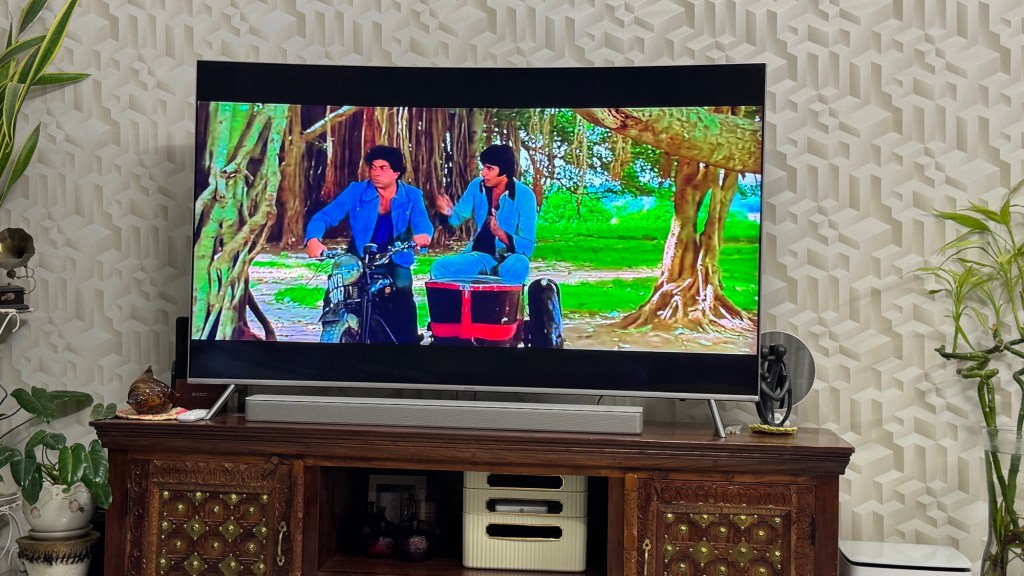
Some movies you watch… and some you live. For my husband, Sholay is not a film — it’s an emotion, almost a religion. I sometimes feel he should’ve been the third wheel between Jai and Veeru! 😅

Maybe words can’t do justice to his love for it — even Gabbar would say, “Yeh pyaar thoda zyada nahi ho gaya re?

After marriage, I’ve lost count of how many times I’ve watched it with him. He says it’s his stress-buster. No matter how long or tiring his day is, he’ll come home, put on Sholay, and watch it like a sacred ritual — half today, half tomorrow.
And if I don’t sit beside him, he gives me that dramatic Thakur stare, the one that silently says, “Yeh haath mujhe de de Thakur!” (as in, give me company!).

A few years ago, when Sholay came back to theatres, we went to watch it. From the first whistle to the last gunshot, my husband was non-stop with the dialogues —
Basanti, in kutton ke saamne mat nachna!
Kitne aadmi the?
Tera kya hoga Kaalia?
He knew every pause, every background beat!

I thought people around us would get irritated, but to my surprise, everyone was doing the same! The whole hall echoed the film like a national anthem. That’s when I realised — this wasn’t just cinema, it was collective nostalgia.

Ramesh Sippy didn’t make a film — he created a feeling that has lived in our hearts for decades. The friendship, the courage, the laughter, the loyalty — Sholay was, and will always be, a celebration of Desi spirit.

And my husband never misses a chance to sing “Yeh dosti hum nahi todenge” with his best friend — and it’s such a lovely sight.
God bless their decades of friendship! ❤️

Every single time he watches it, he still gets teary-eyed at the end… secretly hoping that maybe this timeJai (Amitabh) won’t die. ❤️

Because Sholay may have made history, but in our home, it lives on as a story of true friendship, selflessness, and love for a friend — one that never fades, even after the credits roll.

Today, with the passing of Asrani — our beloved Jailor sahab, another piece of Sholay’s magic fades into memory.
May his soul rest in peace. 🙏

And as he would say —
“Hum angrezon ke zamaane ke jailor hain…”
— a line that will echo in our hearts forever. ❤️

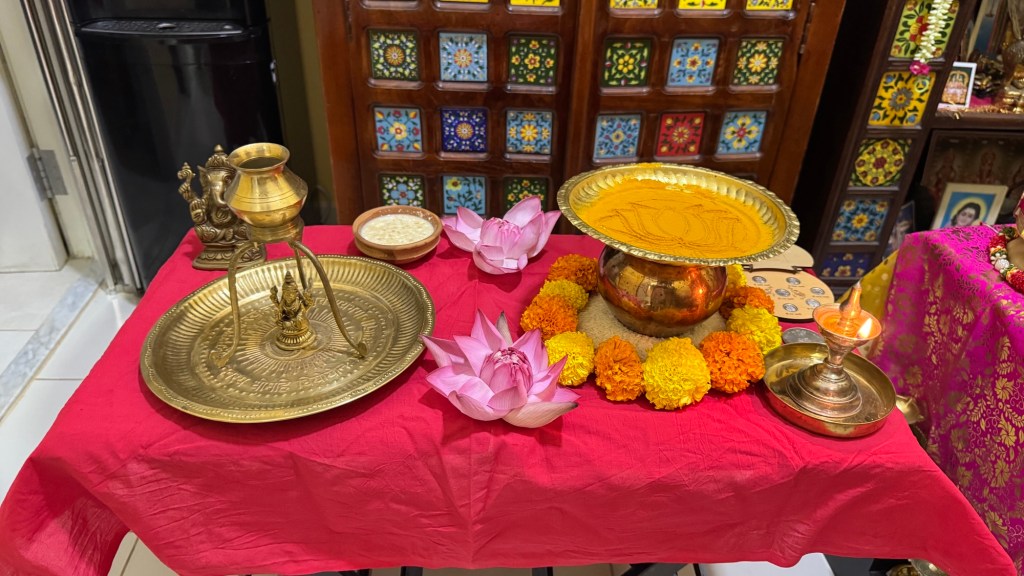
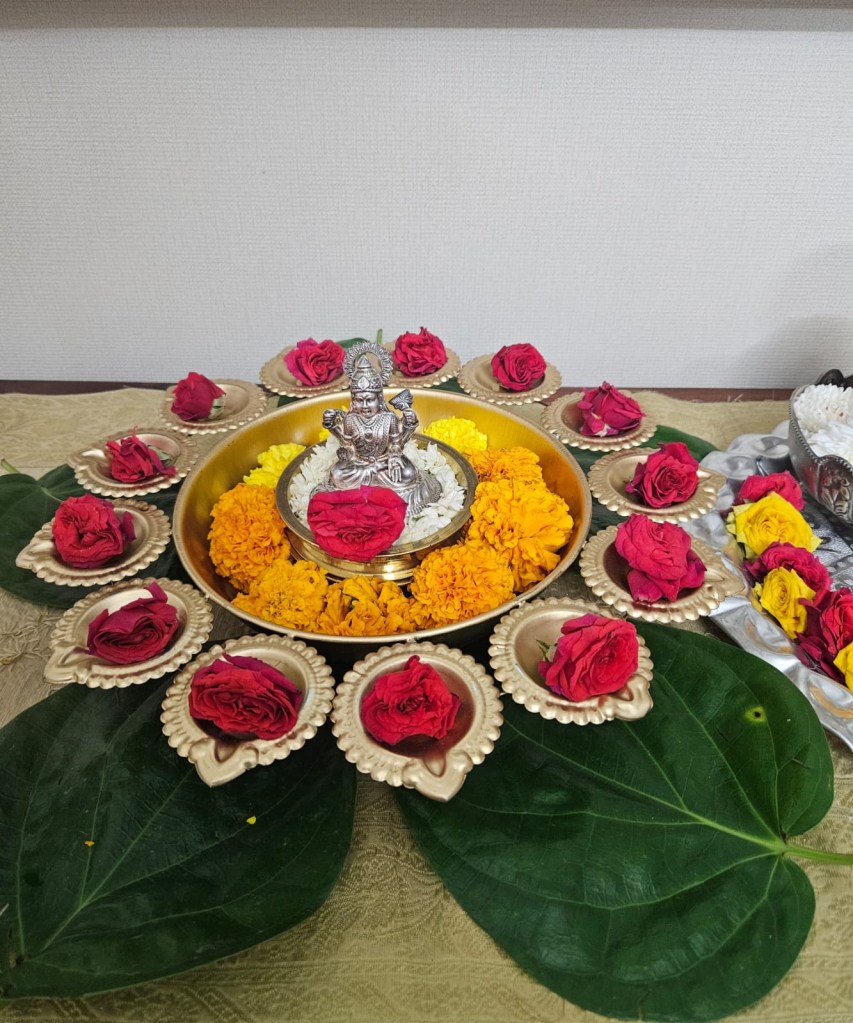
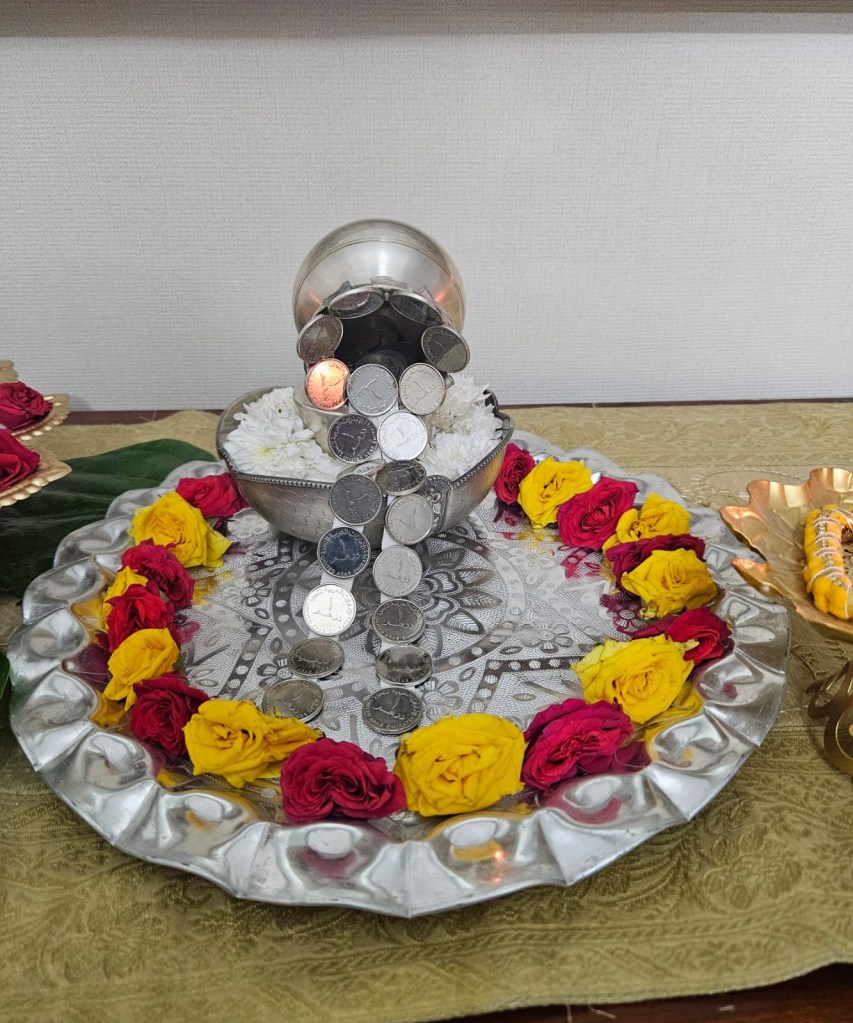
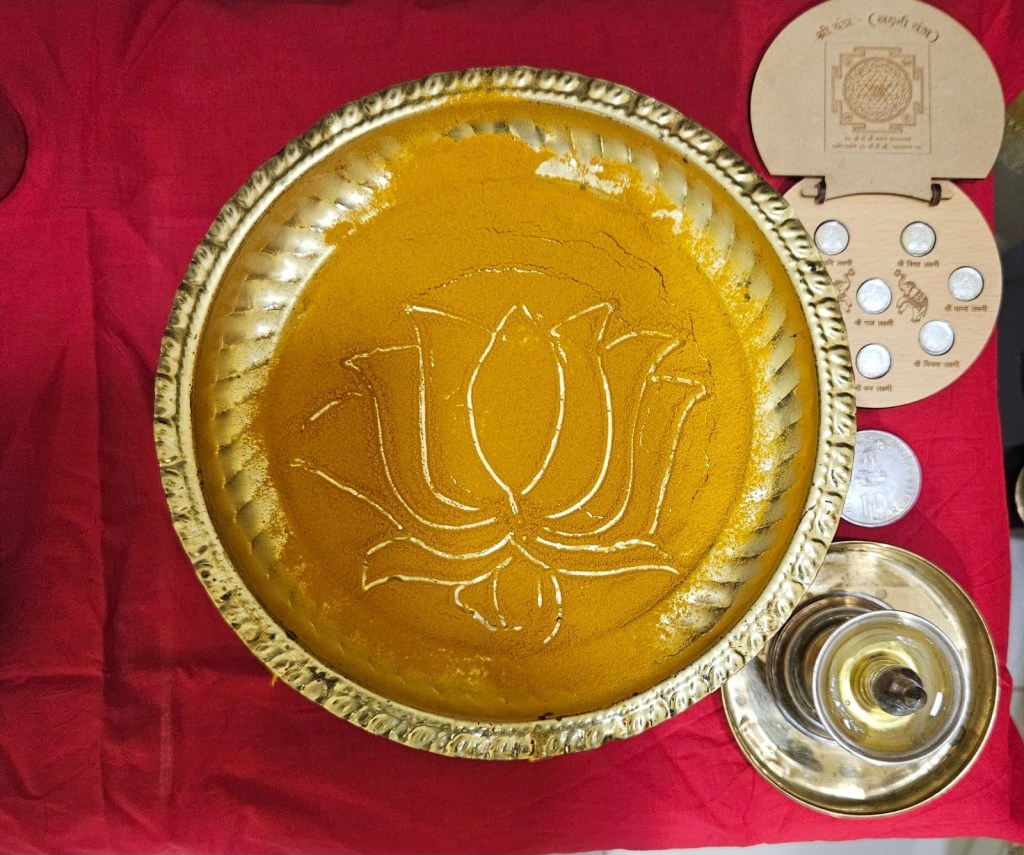
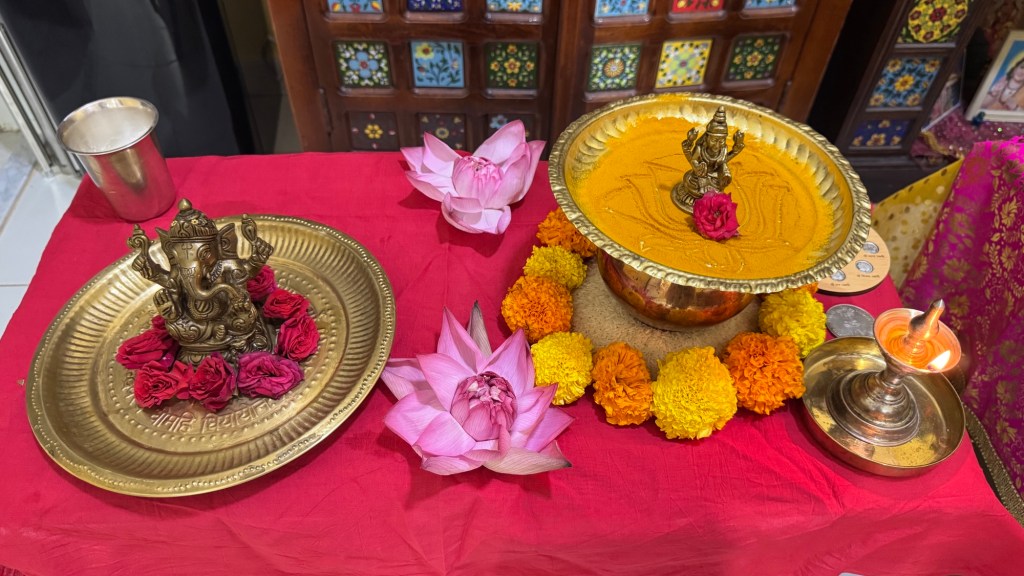
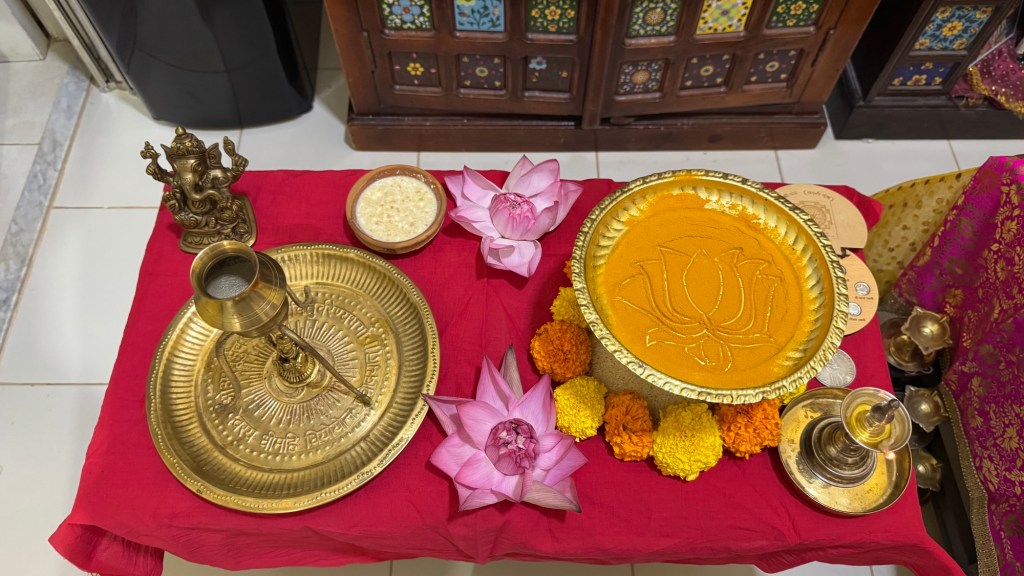
Our Desi-Style Lakshmi Pooja 🪔

Lakshmi Pooja in our home has its own rhythm — a bit of tradition, a bit of teamwork, and a lot of laughter.

My husband takes charge of the rangoli every year. He loves perfection — planning every design and choosing the right colours. I have no patience for it, so he has been doing it year after year, turning it into a riot of colours. My only contribution is cheering him on, and honestly, I don’t think I should do any more! 😅

I take care of the decorations, flowers, and Prasad. I decide where everything should go, and sometimes we even paint our own diyas to make it more special. The house fills with the smell of incense, sweets, and a quiet happiness.

Every year, we try to make it special — not just for Goddess Lakshmi, but for our family. Now our children have also started helping, and that makes it even more joyful.

For us, Lakshmi Pooja is not just about inviting wealth — it’s about feeling thankful for the love, laughter, and togetherness that already fill our home.

And that, I believe, is the true blessing of the festival. 💛

DESI Diwali in a foreign land

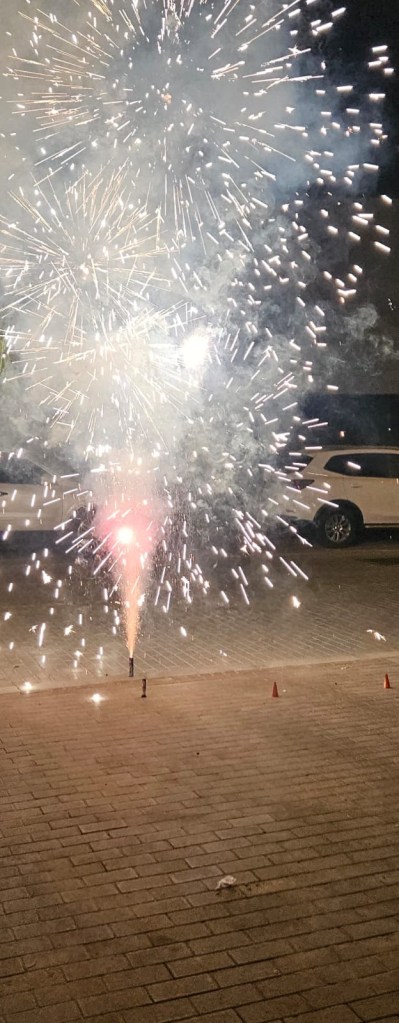
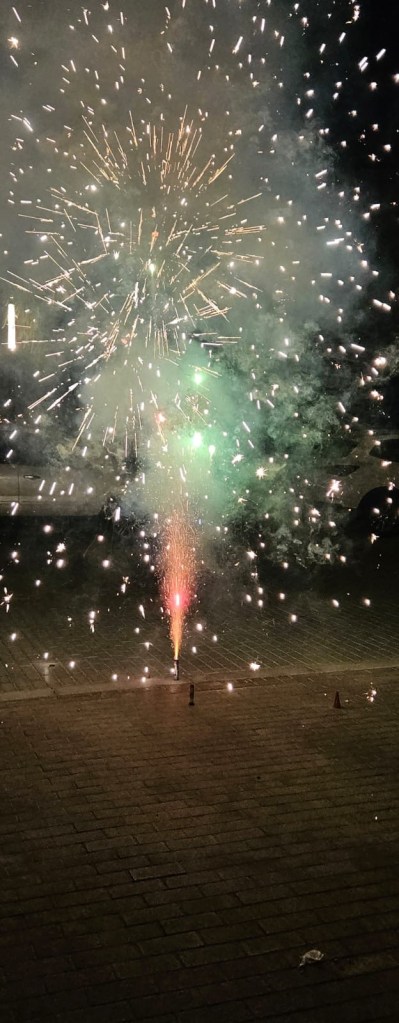
Burning crackers with family and close friends — that used to be the highlight of Diwali!
The entire street would glow, everyone shouting instructions no one followed, and someone’s dad would always say, “Bas ab last one!” (which of course meant ten more rounds).
It was chaos, laughter, smoke, and joy — all rolled into one perfect evening.

Now, cut to life abroad.
We still try to recreate that magic — light a few sparklers, maybe a zameen chakri or a flower pot, all while nervously scanning for neighbors.
Even if it’s just early evening, there’s always that one person ready to complain about the noise pollution.
And those silent “no-sound” crackers? The ones that promise to just sparkle sweetly? — they always have that one rogue pop waiting to test everyone’s blood pressure.
Next thing you know, the community group chat is buzzing louder than the crackers themselves!

Still, we try our best — careful not to disturb anyone, yet determined to keep that festive spirit alive.
Because Diwali without a little sparkle and laughter just feels incomplete.
Someday, I want to take my kids home — to show them what a real Diwali feels like: the smell of fresh sweets, new clothes, lights everywhere, and the sky lit up like a festival painting.
But since the festival always lands between school weeks, we end up celebrating in our own little way — quietly, sweetly, and just a bit homesick.

After all, we’re DESI — we’ll always find a way to make even a muted Diwali shine loud in spirit! 🌟✨

Diwali: Then vs Now — Here vs There

Diwali in India was never just a festival — it was a family affair, a celebration that touched every corner of our lives. The house buzzing with cousins running around, moms juggling a dozen things at once in the kitchen, dads rushing to buy last-minute diyas, and everywhere the scent of fresh sweets and marigolds. Every detail, no matter how small — from perfectly lined diyas to the new bedsheets — was handled with care and love by our parents.

Abroad, we try to recreate it all. We decorate our homes, light diyas (careful of the smoke alarms!), and make laddoos and namakparas that come close to mom’s—but there’s always something just a little different. Our children enjoy the lights, sweets, and gifts, yet they miss the magic we felt as kids — the anticipation that started weeks before, the little surprises, the togetherness that came effortlessly.

And yet, in trying to bring Diwali to life far from home, we are passing down something just as precious: the love, the effort, and the memories we create together. It may not be exactly like our childhood, but it will always be theirs in its own beautiful way.

Diwali is the time to remove darkness and welcome the light of new beginnings.

Wishing one and all a very Happy and Sparkling Diwali 🪔

Marriage: The Longest Running Reality Show!

They say marriage is made in heaven… but the real episodes are filmed in every DESI home!
Two contestants enter — one with logic, the other with emotions — and the show begins.

Daily tasks?
Who left the lights on?
Who forgot the anniversary?
Why is the towel still on the bed?

Then come the kids — the riots of marriage — adding spice, laughter, and guaranteed chaos.
Fast-forward a few seasons, and those cuties turn into teens — the ultimate plot twist!
You can’t yell at them (it’s like talking to a wall), so all vents go straight to the partner.

And in that Bigg Boss–style home, one has an elephant’s memory for every past conflict… while the other survives purely on selective hearing and short-term recall!

Retail therapy becomes the only commercial break before the next “I told you so” episode.

No eliminations, no prize — just lifetime sponsorship from patience and love.
Because in this Desi reality show called marriage, the drama’s real, the actors unpaid, and the TRPs… unbeatable! 🎬😂

Bed time to Binge time!

There was a time when bedtime meant switching off the lights and going to sleep right after dinner.

But now, thanks to OTT platforms, bedtime has become binge time!

One episode becomes three, and before we know it — it’s 3 AM and we’re still saying, “Bas last one!”

Remember when our parents used to say, “Early to bed, early to rise”? Now it’s more like, “Early to binge, late to sleep!” 😄

In Desi homes, weekends are no longer about family visits or outings. It’s full-on binge season. Dinner gets delayed, the remote becomes royal property, and ordering food or snacks is just one call away. You can stretch your legs, relax in your favourite spot, and enjoy the show.

Thrillers keep us glued! You pause in between, turn around and ask, “Who do you think is the culprit?” — and suddenly, everyone becomes a detective. Guessing the plot is half the fun!

And let’s not forget those classic Desi lines we all hear while watching:

  • “Dekha! I told you he was the killer!”
  • “Shhh! Don’t talk during the important scene.”
  • “If you watched ahead without me, we’re not talking!” 😄

Watching with your partner? That’s a whole drama in itself. If you dare to watch ahead — that’s serious trouble! It can take days to be forgiven. This is what OTT has done to us!

From bedtime stories to binge nights, OTT has truly changed the game in every Desi home.

The Mahabharat Mornings – A 90s Ritual We’ll Never Forget

One conch sound… and an entire nation paused.

Every 90’s kid will know exactly what I mean when I say — Sunday mornings were sacred.
Not for brunches, not for outings, but for B.R. Chopra’s Mahabharat.

It wasn’t just a television show; it was an event — a grand weekly ritual every household followed with devotion.

The moment that powerful title song began — the deep Sanskrit chants and the echoing conch — something changed in the air.
It felt like a divine call to pay attention.
A voice that said —
“Main Samay hoon…” — those words still give us goosebumps.

Fathers would adjust the antenna just right, elders would call everyone to gather, and children would rush to the living room — eyes wide, hearts steady.
Even during weddings or family functions, someone would always say,
“TV chalu kar do zara, Mahabharat shuru hone wala hai.”
For that one hour, the world outside didn’t exist.
Life paused — as if the whole nation was breathing in rhythm with the story.

And what made it even more special?
It wasn’t bound by religion or region.
People from all faiths, all backgrounds, all corners of India watched it with the same reverence.
Hindus, Muslims, Sikhs, Christians — it didn’t matter.
Because Mahabharat wasn’t about one religion; it was about humanity, duty, and timeless truths.
Every home — whether it had an idol, a cross, or a prayer mat — had its eyes fixed on the same screen.

There were no replays, no streaming apps, no “skip intro” buttons — just that one sacred telecast every Sunday morning.
Miss it, and you’d spend the week catching up through your neighbors’ excited narrations.

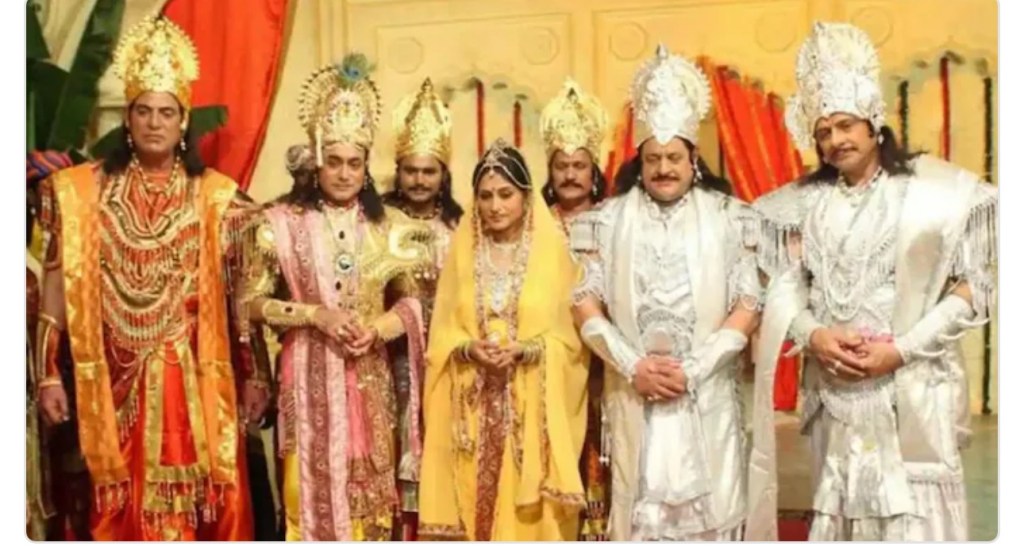
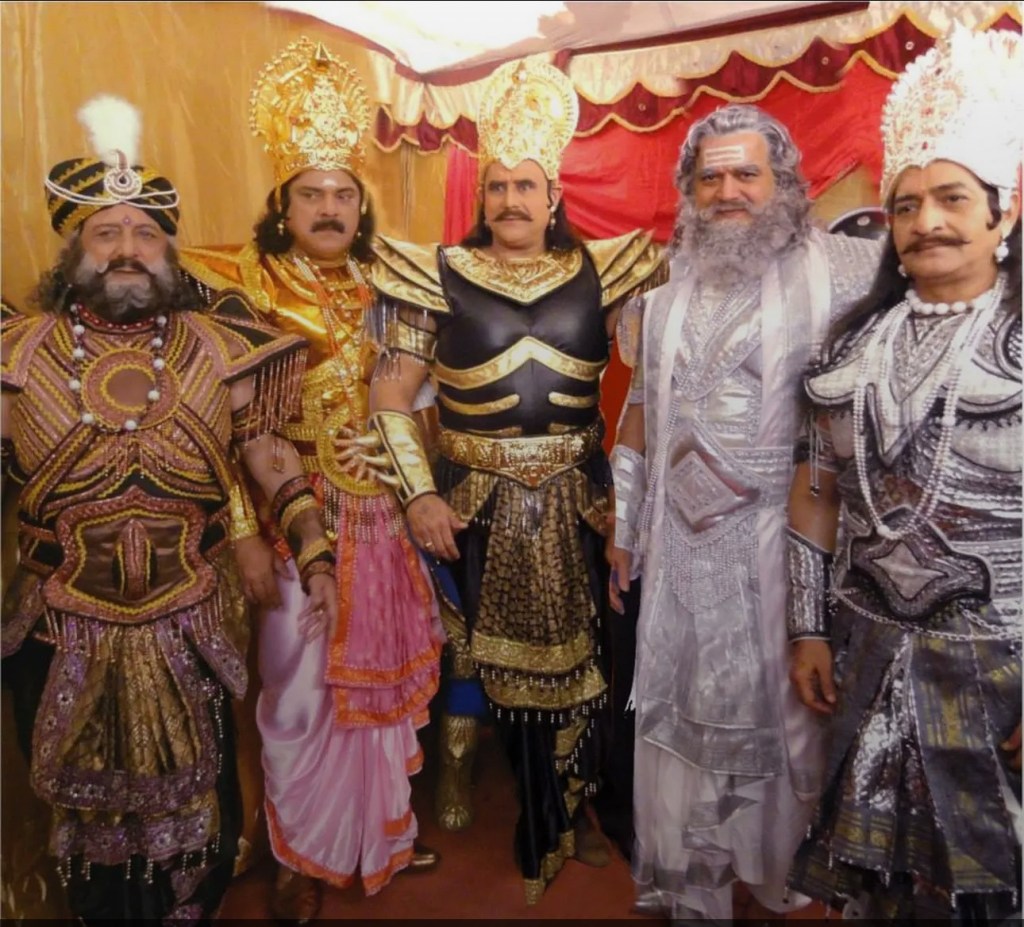
Each character felt so real that we still remember them not by their real names, but by the ones they brought to life.
Nitish Bharadwaj will forever be Lord Krishna — calm, wise, and divine.
Puneet Issar — the fierce Duryodhan.
Roopa Ganguly — the graceful yet unyielding Draupadi.
Gajendra Chauhan — the ever-righteous Yudhishthir.
Firoz Khan — the intense Arjun, torn between duty and heart (who later changed his name to Arjun).
Pankaj Dheer — the noble Karna, whose dignity still commands respect.
And Mukesh Khanna — our Bhishma Pitamah, whose every word carried the weight of truth, wisdom, and sacrifice.

We didn’t see them as actors — they were epic souls reborn for our generation.

And when Krishna spoke the words,
“Karmanye vadhikaraste ma phaleshu kadachana…”
we might not have understood it fully then — but the verse lingered in our minds.
It grew with us, whispering its meaning in moments of struggle and reflection.

Mahabharat wasn’t just a story — it was an education in life.

After every episode, living rooms turned into discussion zones — fathers quoting Bhishma Pitamah, mothers admiring Draupadi’s strength, and children re-enacting the war of Kurukshetra with sticks, towels, and unshakable intensity.

Those were simpler times.
One television per home. One channel. One nation watching together.
No scrolling, no spoilers — just pure connection and collective awe.

Today, we have endless OTT platforms, glossy visuals, and remakes — yet none carry the same emotion, depth, or unity that Mahabharat created every Sunday morning.

B.R. Chopra didn’t just give us a television show.
He gave us a memory that refuses to fade.
He gave us a shared heartbeat — an experience that united generations, communities, and faiths.

And today, as we remember those golden mornings, we bow our heads in respect to the departed soul — Pankaj Dheer, our very own Karna.
He will forever remain Karna for us — noble, dignified, and immortal in our memories🙏😢